
A new culture, but the same faithful God
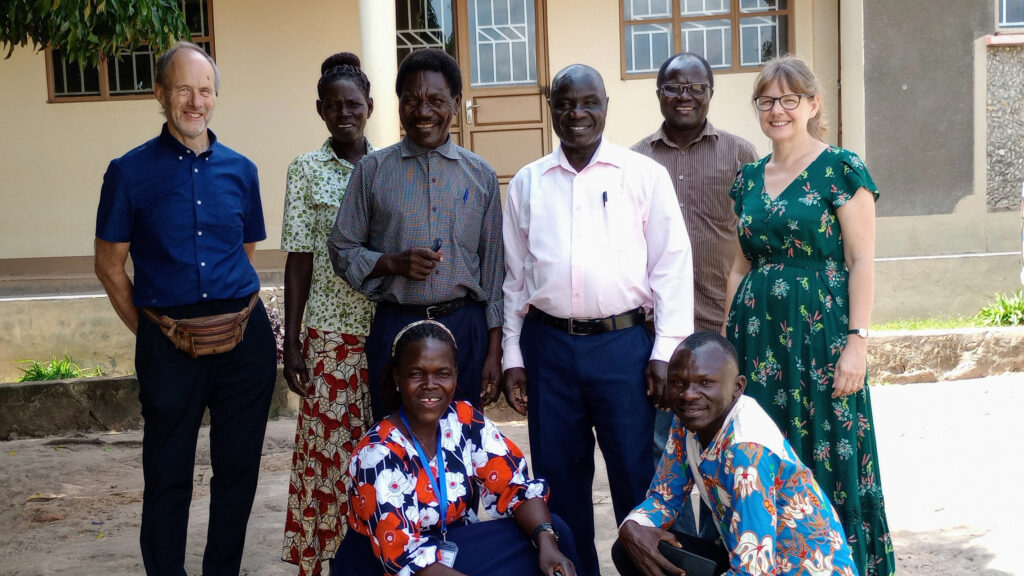
Philip and Heidi Knight moved to Uganda last November, to begin preparing to support an Old Testament translation project. As they reflect on these early days in a new culture, they see the Lord’s faithfulness in many ways.
Proverbs 27:1 says, ‘you do not know what a day may bring’—and that seems to be especially true in Uganda. Every day is an adventure. For example, there’s a little yellow frog in the sink. We’re helpfully told that it’s probably poisonous, but it escapes behind the sink and can’t be removed so we’re afraid to use the sink when we go to the bathroom in the dark that night. Another time twelve of us travel in one vehicle on rough dusty roads on a hot day, yet the children go to sleep piled on top of each other. Meanwhile the thirteenth traveller, a live chicken, pecks our toes!
Philip’s story
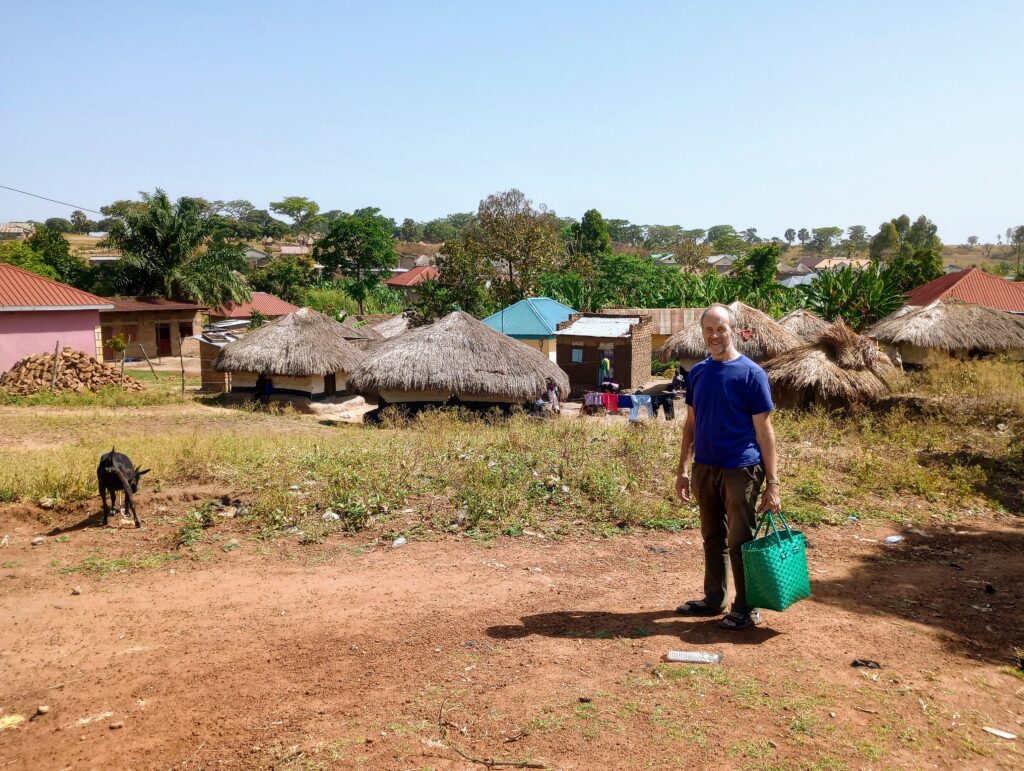
It had never occurred to me that I might one day be called to serve the Lord in Africa, but now I really can’t think of anything I’d rather be doing. Settling into Uganda has been a bit like getting into the sea; it’s great now I’m in, but the process was painful. Externally I remained my usual imperturbable self, but inside I was frankly scared, my heart kept racing for no apparent reason and I felt faint and breathless at the thought of going into anything but the most Western looking of shops. But three months later, my heart is its usual stolid self and I’ve discovered that the local shops sell an amazing selection of goods.
I have also had to revise my preconceived ideas—things that to me appeared to be in urgent need of upgrading are, in fact, the preferred way of doing things. Why cook indoors? Charcoal burners outside work well and it’s cooler under the trees. Why have a toilet in the house? That sort of thing is better kept outside. Rearranging the house is far less important than paying for children’s education and being able to support the extended family.
The man in front
We are learning to depend on the Lord for all sorts of little things. In response to prayer, the Lord has provided us with practical help with things that are daunting when you first meet them. Help often appears in the form of ‘the man in front’ just at the right time: the lorry in front demonstrating how to negotiate a complex junction; the car in front that gets stopped by the police so they are too busy to stop us; the man in front in the visa office who unwittingly shows us the procedure for giving fingerprints etc.
The one exception is when we are invited for meals. As honoured guests, we’re at the head of the queue for food. It all looks so different and it can be hard to know what to take, how much and how to eat it! Eating with fingers, as is customary, is quite a challenge (though we doubt it was when we were younger).
Rich or poor?
It is strange to find ourselves at the same timeboth rich and poor. In Ugandan terms we are rich; we have running water and electricity (sometimes) and we can afford to eat out at the most luxurious shopping centre in the country if we want to. At a church we visited, we put 20,000 Ugandan shillings (£4) into the collection, and at the end of the meeting we discovered our contribution was two thirds of the total offering.
However, in Western terms our life here is basic, with no hot water, no washing machine, no lawn mower, no fresh milk (and no Marmite!).
How to appropriately use our money is a continual challenge—whether to give to an acquaintance who asks; how much to give to the endless special collections; how to respond to beggars and even how hard to haggle over prices in the shops. These are questions that arise most days and each case seems to need a different answer!
Heidi’s story
I find one of the most attractive things about Uganda is the importance of relationships: people come first and extended families stay together and support each other. The people are a happy people. When we went around our local area greeting our many neighbours (there are probably fifty families within three minutes’ walk of our house), they welcomed us enthusiastically and laughed with delight at our efforts to speak their language.
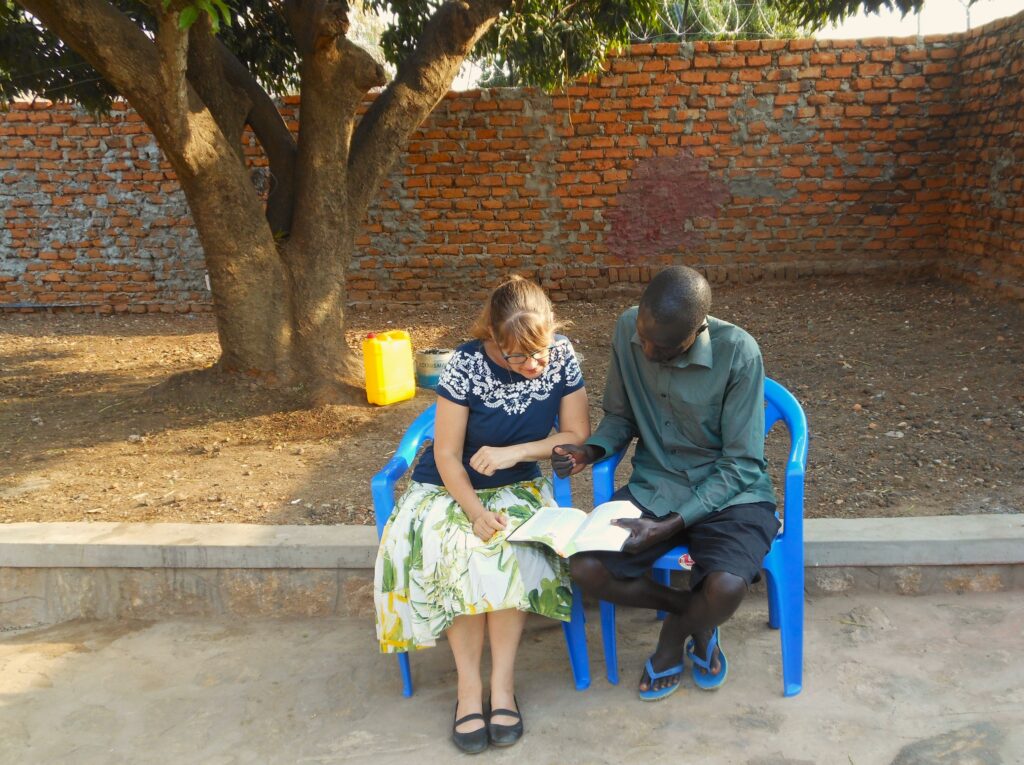
I have been especially encouraged by the opportunities to share Jesus with people. I visited an elderly lady who is unable to stand, and can only sit in the doorway of her little thatched house. She doesn’t speak English so, as I approached, I asked the Lord to help me communicate with her. As I greeted her, a girl about seven years old appeared from nowhere. She translated what I said and we were even able to pray together. Our watchman helps me read the Kakwa Bible each day, improving my Kakwa and his knowledge of the gospel. When he lost our gate keys, I prayed with him and they were quickly found.
We see the Lord working. Just last week we heard that a village elder was converted through outreach done by another Ugandan Bible translation team. He publicly burned his shrines and fetishes and following this hundreds of people in the village turned to the Lord.
Encouragement
We are greatly encouraged by the genuine interest of people in the UK and the cheerful support of fellow missionaries sharing funny stories of things they’ve experienced. We have seen God answering prayers for us in clear and practical ways and we are touched by the willingness of people to keep in contact and pray for us and by their generous giving.